
At Burlerrow Farm, sustainability is embedded at the heart of the business. From crop selection to energy generation, one of the most impactful choices we’ve made is growing Miscanthus, a fast-growing perennial grass that offers significant environmental benefits and serves as the foundation of our animal bedding brand, Burlybed.
Our approach to miscanthus goes beyond just bedding production. It is a model of regenerative agriculture, biodiversity support, and carbon-conscious land stewardship.
What makes miscanthus the most climate-friendly crop grown in the UK?
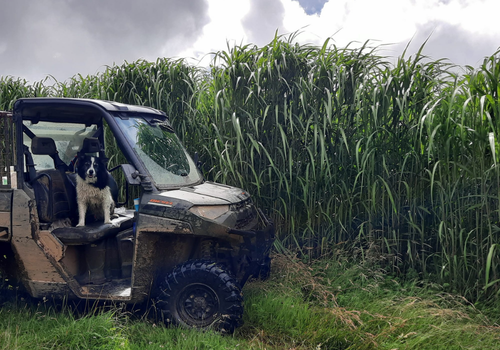
Miscanthus is commonly known for its role in bio-energy and is an increasingly popular option for animal bedding too.
It is a perennial crop that thrives on marginal or low quality land and requires minimal chemical input. Once established, it grows rapidly, reaching over three metres, and can yield up to 10 tonnes of dry matter per hectare annually. The rhizomes, the crop’s woody underground stems, move carbon deeper into the soil, where it can remain stable. Miscanthus varieties with large underground growth and roots with lower lignin levels are most effective for tackling climate change (1) These deep root systems also stabilise soil, improves structure, and enhances water retention all of which are critical for long-term soil health.
Crucially, Miscanthus acts as a carbon sink. It is recognised as a genuinely carbon‑negative crop. Independent studies show it captures at least 0.64 tonnes of carbon per hectare each year which is the equivalent to 2.35 tonnes of CO₂e stored directly in the soil through its extensive rhizome system (2)
It is a powerful, fast-acting and evidence backed crop for long‑term climate mitigation.
Biodiversity Benefits on the Ground
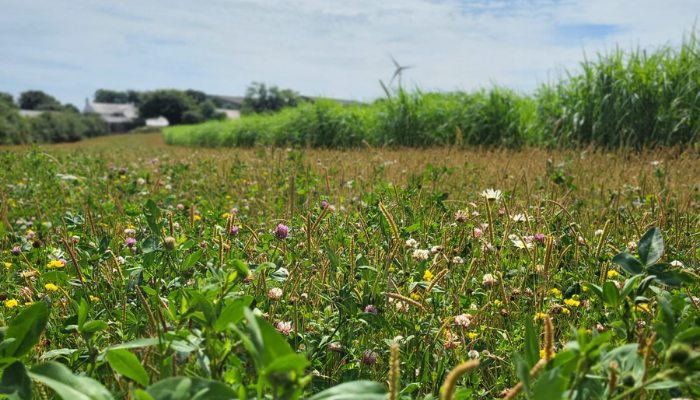
Our Miscanthus fields are designed with wildlife in mind with each including dedicated wildlife margins. These buffer zones between hedgerows and the miscanthus crop serve as food source and shelter rich corridors for pollinators, small mammals, birds and other wildlife.
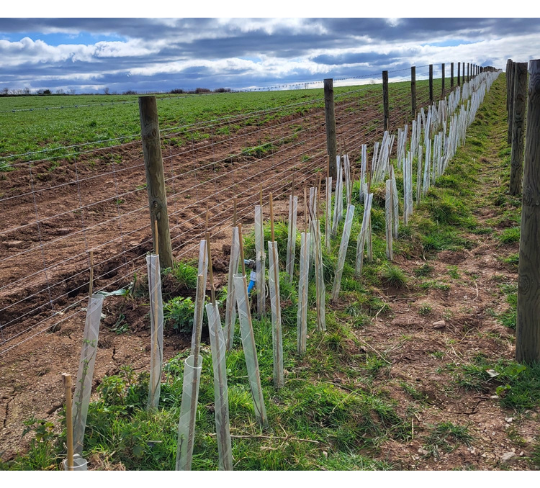
Last year, across the farm we planted nearly 600 metres of new hedgerow, comprising over 3,400 native trees and shrubs. The species we included were Hawthorn, Blackthorn, Hazel, Dogwood, Bird Cherry, Crab Apple, Beech, and Field Maple all of which were chosen for their ecological value. As these hedgerows mature, they’ll offer nesting sites, food sources, and seasonal cover for a wide range of wildlife.
Both our wildlife margins and hedgerow planting initiatives form part of the farm’s Environmental Stewardship Scheme, which includes replacing fence lines with living boundaries to enhance landscape connectivity and natural resilience.
The Magic of Miscanthus for Bedding Production
The natural structure of miscanthus, particularly when processed, makes it an ideal substrate for use as horse and livestock bedding.
It is:
Incredibly absorbent: Effectively controlling moisture levels in the bedding and helping to reduce ammonia build-up
Durable: Due to the structure of the outer cane making a long lasting product when in use
Biodegradable: Rotting down quickly on the muck heap and composting efficiently. Ideal to spread back on the land
Economical: Quick and easy to use with less wastage
The Power for Production
Our production process is powered by renewable energy. Two biomass boilers, fuelled by Miscanthus, provide heat for drying bedding and warming farm buildings. A wind turbine and solar panels generate around two-thirds of the farm’s total energy needs, reducing reliance on fossil fuels.
Packaging with Purpose
Packaging remains a challenge for sustainable businesses. We have to balance our passion to be increasingly sustainable with the need for our products to be packaged in a practical way for our wholesalers, retailers and end customers. We currently use Low Density Polyethylene (LDPE), a recyclable plastic similar to supermarket “bags for life.” Some local authorities (LA) will accept soft plastics in kerbside recycling. The LDPE film that we use also contains at least one-third post-industrial recycled content, actively diverting waste from landfill.
Customers are encouraged to check with local authorities regarding LDPE recycling options, and the Burlybed team continues to research alternatives that balance sustainability with product integrity.
Our Future
For us, Miscanthus is more than just a crop. From restoring soil health and supporting wildlife to locking away carbon and powering our home with renewable energy, it represents the kind of farming future we believe in. One where productivity and environmental responsibility work hand in hand.
Through Burlybed, we’re able to share the benefits of this remarkable plant with horse owners, livestock keepers, and other growers who value performance and sustainability. Every bale reflects a system built on regeneration, respect for the land, and a commitment to continual improvement.
As we expand our wildlife habitats, invest in renewable energy, and explore alternative packaging solutions, our mission remains the same, to farm with integrity, innovate with purpose, and leave our landscape richer than we found it.
Miscanthus is helping us do exactly that.